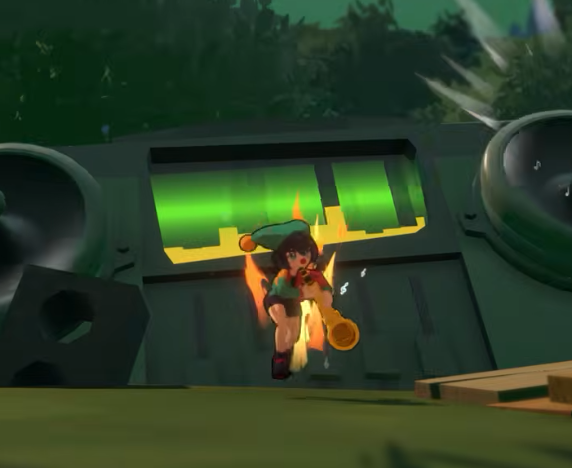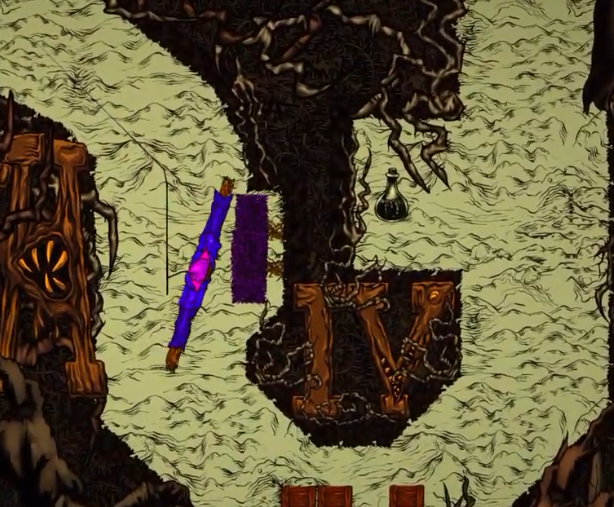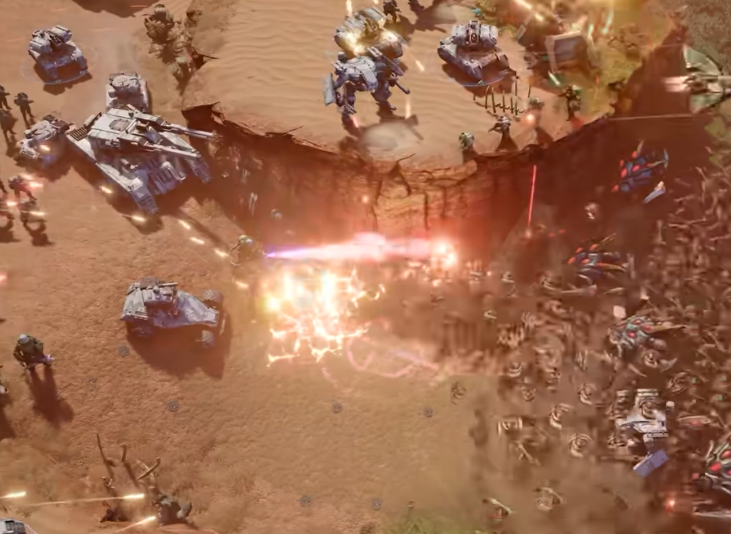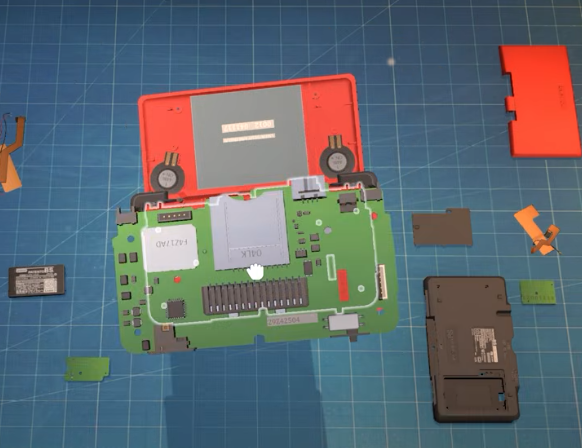
The wait is over! Emina Studio has officially dropped the public demo for ACE Strategy: Mecha Nova today, February 6, 2026. If you’ve been looking for a game that blends the tactical depth of a grid-based battler with the high-stakes progression of a roguelike deckbuilder, this is your wake-up call.
Unlike your standard “play a card, deal some damage” deckbuilders, Mecha Nova adds a vital layer of spatial strategy that changes everything.
Why You Should Pilot This Demo:
Tactical 3×3 Grid: It’s not just about what you play, but where you stand. You control up to 9 units—including your main ACE Mecha, powerful allies, and drones.
Directional Combat: Position matters. You’ll deal massive bonus damage by flanking or attacking enemies from the rear, but be careful—they can do the same to you.
Drone Overlays: A unique mechanic that lets you stack identical drones in the same slot to save space while exponentially multiplying your firepower.
Deep Customisation: Build your “Dominant Build” using permanent Chip Cards to enhance your chassis and consumable battle items for clutch turn-arounds.
Steam Next Fest & Beyond
This demo launch serves as the ultimate training ground before the game takes centre stage at Steam Next Fest on February 23. It’s localised in 9 languages, so pilots from across the globe can jump into the cockpit right now.
“Your mech is the carrier of strength. Your cards are the reach of that strength.”
Ready to claim tactical superiority? The demo is available for free on Steam. Download it, find your favourite pilot-mech synergy, and start climbing the procedurally generated campaign!
Find out more here on Steam – https://shorturl.at/JPbho
In the landscape of indie gaming, few titles manage to be as aesthetically pleasing and emotionally draining as Menherarium. It is a game that doesn’t just ask you to play; it asks you to endure.
If you’ve ever felt the heavy weight of a notification from a friend in crisis, Menherarium will feel uncomfortably familiar.
What exactly is Menherarium?
Developed within the Yami-Kawaii (sickly-cute) subculture, Menherarium is a simulation game that mirrors the experience of being a “caregiver” or emotional anchor for characters dealing with severe mental health struggles.
Through a simulated smartphone interface, you communicate with various characters, managing their stability through your responses. It captures the frantic, often circular logic of online codependency with startling accuracy.
Key Pillars of the Experience
The Aesthetic Contrast: The game uses pastel pinks, sparkles, and adorable character designs to mask—and paradoxically highlight—the dark subject matter. It’s the visual equivalent of a sugar-coated pill.
The Messaging Mechanic: Most of your “gameplay” happens via text. The tension comes from the limited time to reply and the unpredictability of how your words will be received.
The “Saviour Complex” Trap: The game brilliantly punishes the player for trying to be a “hero.” Often, the more you try to “fix” a character, the worse the outcome becomes, teaching a hard lesson about boundaries.
Why It Matters (and Why It’s Polarising)
Menherarium isn’t a “cosy game” despite its looks. It belongs to a subgenre of psychological horror that focuses on emotional horror rather than jump scares.
Feature
Impact on Player
Branching Dialogue
Forces you to weigh every word; creates high anxiety.
Sanity Meters
Visualizes the invisible decline of the characters’ mental states.
Multiple Endings
Highlights how easily relationships can spiral into toxicity or tragedy.
A Vital Content Warning
This game deals explicitly with self-harm, depression, and obsessive behaviour. It is an interactive character study intended for a mature audience that can navigate these themes without compromising their own mental well-being.
Final Thoughts
Menherarium is a masterpiece of its niche. It serves as a digital mirror, reflecting the exhaustion of the “online support” role and the complexities of human connection in the age of the smartphone. It’s beautiful, it’s heartbreaking, and it’s deeply honest.
Pro Tip: If you’re playing for the first time, don’t aim for the “Best Ending” right away. The game is designed to be felt, not optimised.
Find out more here on Steam – https://shorturl.at/t3bTe
If you’ve ever thought, “I’d love to lead a civilisation, but I wish it felt more like a high-stakes trip to Vegas,” then Spinera is about to become your new obsession. Developed by Arvis Games, the official demo just dropped (January 27, 2026), and it’s a wild mashup of roguelike deckbuilding and civilisation management.
The core gimmick? Your resources aren’t just mined or harvested—they’re spun.
How It Works
Instead of a standard tech tree or worker placement, you operate a massive, empire-themed slot machine.
The Spin: Every turn starts with a pull of the lever. The symbols that land determine your Military, Science, Culture, and Gold.
The Deckbuilding: You don’t just hope for luck; you build the machine. You can add specific resource symbols, multipliers, and “Wild” jokers to tilt the odds in your favour.
The Progress: In the demo, you’ll fight to survive the first 3 eras (out of 9 planned for the full game). You have to hit “Era Scores” to advance before history leaves you behind.
Key Features to Watch For
Historical Leaders: Choose icons like Napoleon or Cleopatra. Each has “Rule-Breaking Traits” (e.g., Napoleon can use Culture to train soldiers).
Wonders of the World: Building a Wonder like the Pyramids doesn’t just look cool—it physically changes the slot machine layout, creating “landing zones” for massive passive bonuses.
Risk vs. Greed: Do you spend your spins on Science to automate your growth, or do you pump your Military symbols to defend against incoming raids?
The Verdict: It’s “Civilization” meets “Luck be a Landlord,” and it is surprisingly stressful in the best way possible.
The demo is currently available on Steam for PC and macOS. It’s a great chance to see if you have the strategy to outsmart the “Cycle of Fate.”
Find out more here on Steam – https://shorturl.at/W7vol
The wait is over! New York’s underground has officially become a warzone, and we need YOU to hold the line. The Subway Invasion Demo has just launched on Steam, and it’s time to see if you have what it takes to protect the passengers.
As a lone security guard, you’re the only thing standing between a train full of survivors and waves of relentless extra-terrestrial threats.
What’s waiting for you in the Demo:
Tactical Combat: Fast-paced, pistol-based gunplay where every bullet counts.
Scavenge & Upgrade: Find supplies in the dark tunnels and unlock 5 different weapon upgrades to even the odds.
Interactive Environments: Use lockable doors and environmental traps to funnel the horde.
Wave-Based Survival: Experience the opening 15–30 minutes of the game, including two intense “event waves.”
Play it now for FREE on Steam before it takes over Steam Next Fest this February!
Are you going to be the hero the city needs, or just another casualty in the tunnels? Download the demo, set your high score, and show us your best defensive setups in the comments!
We have just received the news that the upcoming Cold War-gone-hot tactical shooter, ’83, has been delayed, pushing its Early Access launch from the anticipated 2025 window to early 2026.
For a game that has already faced a tumultuous development history—including being shelved and then spectacularly revived by Blue Dot Games—any delay can sting. However, after looking at the reasoning behind the decision, the community should breathe a sigh of relief.
A Cold Dose of Reality: The Steam Next Fest Feedback
The heart of the delay lies in the recent Steam Next Fest demo. While the demo gave players their first proper taste of the large-scale, 40v40 combat between NATO and the Warsaw Pact, the feedback was, frankly, mixed. Players loved the core concept—the promise of “accessible realism”—but flagged several key areas that needed serious work:
Janky Movement and Animation: Transitions and terrain interactions were not as fluid as a modern tactical shooter demands.
The UI Experience: User Interface elements were a major point of criticism, with the current design feeling clunky and dated.
Gunplay Polish: While the goal is realism, the feel of the weapons—the recoil, the visual feedback, and the camera shake—needed refinement to hit that sweet spot of realistic and fun.
The community spoke, and Blue Dot Games listened. This isn’t a nebulous, vague “we need more time” announcement; the developers have provided a clear, actionable roadmap for the next few months, focusing specifically on these core criticisms.
What the Extra Time Will Deliver
The delay isn’t a pause—it’s a pivot to polish. Blue Dot Games is using the extra time to tackle the feedback head-on:
A Complete UI Overhaul: The new User Interface is being completely replaced to improve clarity and usability for the Early Access launch.
Destruction Comes to the Battlefield: They are rolling out an early destructibility system, a significant technical undertaking. Imagine a vehicle tearing through a defensive line or a well-placed explosive blast opening a new flanking route—this is a genuine game-changer for tactical play.
Refined Realism: Everything from the gunplay to the fluidity of movement and even the visual fidelity of era-authentic gear is getting a dedicated development pass.
Quality Over Crunch: The Right Choice
In an era of rushed releases and “ship-it-now, fix-it-later” mentalities, this decision is a powerful statement.
’83 already has a passionate fanbase, many of whom are spiritual successors to games like Rising Storm 2: Vietnam. This community deserves a game that honours its legacy and delivers on the promise of an intense, large-scale Cold War battlefield experience.
The disappointment of waiting longer is momentary. The regret of an unfinished, poorly received launch would last forever. By pushing the Early Access launch into early 2026, Blue Dot Games is making the necessary investment in quality. They are choosing to deliver a great first impression that will resonate with both tactical FPS veterans and newcomers.
Let’s look forward to early 2026. The Cold War may have been delayed, but when the call to arms finally arrives, we can be confident we’ll be fighting on a much better battlefield.
What are your thoughts on the ’83 delay? Do you prefer a finished product later, or are you eager for Early Access now? Let us know in the comments!
In a world full of open-world RPGs vying for our attention, one upcoming title is looking to stand apart by taking a page straight out of the genre’s classics: Of Ash and Steel. Developed by Fire & Frost and published by tinyBuild, this third-person, open-world action RPG promises a return to the no-hand-holding, pure-exploration experience of beloved 2000s games.
Set for release on PC (Steam and GOG) on November 6, 2025, Of Ash and Steel is shaping up to be a game for those who fondly remember a time before glowing quest markers dictated every move.
A Low-Fantasy World That Doesn’t Hold Your Hand
Of Ash and Steel places you on the island of the Kingdom of the Seven, a realm that has fallen into disrepair and is plagued by the threat of volcanic ash. You start not as a mighty hero, but as Tristan, a humble orphan-turned-cartographer whose main skill, ironically, fails him when his expedition’s ship is wrecked on the shores of Grayshaft.
This focus on a “zero-to-hero” journey is central to the experience. The developers at Fire & Frost have made a bold commitment: there are no quest markers or compasses. You must pay attention to in-world directions, landmarks, and your own instincts to navigate the dangerous, fixed-level world. This commitment to player-driven exploration is perhaps the game’s most compelling feature, encouraging a level of immersion and discovery often missing in modern titles.
Challenging Combat and Deep Customisation
Getting around is one thing, but surviving is another. The game features challenging action-RPG combat, utilising swords, bows, and even basic magic. This isn’t a power fantasy right out of the gate—initial encounters can be lethal, a stark reminder that Tristan is a novice.
The combat system offers depth with three different stances and a variety of weapon types (axes, swords, rapiers, etc.). As you progress, you’ll invest in attributes like Strength, Dexterity, Stamina, Insight, and Fortitude, allowing you to truly tailor your fighting style and unlock abilities. The survival elements, requiring you to stay fed and watered, further ground the experience in a gritty, low-fantasy reality.
The Soul of the Classics
The developers cite inspiration from classics like Gothic, The Witcher, and Fable, and it shows in the game’s DNA:
No Level Scaling: Just like classic RPGs, enemies inhabit fixed locations with set levels. Wander off the beaten path too early, and you’ll find yourself quickly overwhelmed—a thrilling risk-reward structure.
NPC Reactivity: Characters in the world won’t treat you like a legendary saviour from the start. They react to your fame, armour, and accomplishments, meaning your journey from vagrant cartographer to respected force is acknowledged by the inhabitants of Grayshaft.
Skill-Based Progression: Beyond combat, skills extend to professions like crafting, cooking, and alchemy, offering various ways to survive, earn money, and prepare for your next dangerous venture.
Ready to Forge Your Path?
Of Ash and Steel is a breath of fresh air for fans of demanding, richly detailed RPGs. It challenges you to slow down, explore, and learn the world’s secrets through sheer grit and observation. If you’re tired of being led by the hand and crave a world that pushes back, this low-fantasy epic from Fire & Frost and tinyBuild should be high on your wishlist.
Are you ready to dive into the ash and steel and forge your own legend? Let us know what you think of this old-school approach in the comments!
The world of psychological horror is about to get a whole lot colder. Independent developer MelonPolygon, led by the incredibly talented solo dev Anzor Lejava, is dropping us into the chilling isolation of the Arctic with the demo for their upcoming game, Insomnia: Chapter One. Forget jump scares—this is a slow-burn descent into paranoia, perfect for anyone who loves a horror experience that gets under your skin and stays there.
Inspired by atmospheric classics like Still Wakes the Deep, The Thing, and Amnesia, Insomnia: Chapter One is a first-person narrative adventure that trades in combat for raw, emotional survival. Here’s why this title should be at the top of your must-play list.
A Routine Mission, A Descent into Madness
The premise of Insomnia: Chapter One is simple, yet immediately unsettling: you play as Ethan Miller, a technician sent to the remote Arctic research station, “Persei,” after it mysteriously loses contact with the outside world in 2012. What seems like a routine maintenance job quickly unravels into a nightmare.
The station is not just deserted; it’s unravelling. Every corridor and abandoned room is a piece of a horrifying puzzle, filled with the echoes of what went wrong. As Ethan, you must explore, listen, and piece together the fragments of a decaying world while battling your own mounting paranoia and guilt.
Gameplay: Survival Through Observation
Crucially, this is horror without combat. The focus is entirely on survival-based exploration and environmental storytelling. Your only tools are your wits, your ability to stay sharp, and your desperate need to uncover the truth.
Environmental Storytelling: The Persei Station is the central character. The developers have designed a space where the atmosphere itself is a threat, whispering secrets through the pipes and shadows. Finding notes, listening to log recordings, and observing the decay around you are the only ways to progress.
Psychological Tension: This is a game designed to mess with your head. As Ethan’s grasp on reality fractures, the lines between what is real and what is the creation of his fear will blur. It’s a terrifying exploration of isolation and the fragile limits of the human mind.
If you appreciate a game that builds an almost unbearable tension through atmosphere, sound design, and narrative instead of relying on cheap thrills, then you’ll feel right at home with Insomnia: Chapter One.
The Indie Spirit and Episodic Vision
It’s always exciting to see a passion project come to life, and this game is the creation of a solo developer, Anzor Lejava, working under the studio name MelonPolygon. This intimate development process has clearly allowed for a deep focus on immersion and narrative weight, crafting a horror game that feels genuinely “human.”
As the title suggests, Chapter One is just the beginning. This game is planned as the start of a larger episodic narrative, promising to delve even deeper into the themes of fear, isolation, and psychological dread. Getting in on the ground floor with this first chapter is your chance to witness the birth of what could be a compelling new voice in the horror genre.
Where to Find Your Dose of Dread
A free demo of Insomnia: Chapter One is set to launch during Steam Next Fest 2025 and will also be showcased at Scream Fest 2025, giving you the perfect opportunity to experience the terrifying atmosphere for yourself.
If you’re ready to trade your controller’s attack button for a deep breath and a close look at your surroundings, keep your eyes on this project. The Arctic wastes of Persei Station are waiting, and they have secrets to share—if you’re brave enough to listen.
The concept of the Panopticon—Jeremy Bentham’s 18th-century design for a prison where inmates could be constantly observed without knowing when they are being watched—is a chilling metaphor for surveillance and self-censorship. It’s a concept that has inspired philosophers, writers, and, increasingly, game developers.
While the name “Panopticon” (or variations like Panoptic) has been applied to several games, from cooperative board games to hidden-object adventures, there’s a new title on the horizon that truly captures the psychological dread of being perpetually under the gaze: The Panopticon by ATLANTION.
Slated for release in Q4 2025 (with an updated demo now available on Steam), this game is shaping up to be a tense, mind-game-driven multiplayer experience that puts the classic surveillance trope to a deadly, strategic use.
The Game of Eyes: Strategy Meets Survival
ATLANTION’s The Panopticon is best described as a high-stakes, multiplayer strategy death game, drawing inspiration from classic duelling games but layered with the psychological pressure of a facility where you are constantly being tested.
Here’s what makes it stand out:
Rock-Paper-Scissors with a Bullet: The core gameplay revolves around simultaneous, strategic duels. Players face off, choosing an action from a limited set (like Block, Get Ammo, or Shoot). You have to predict your opponent’s move to survive and win. Did they try to load up? Hit them with a shot. Are they blocking? Take a moment to secure your own ammo.
Mind Games are Key: In a facility built on the idea of observation and control, the mind games are the real weapon. Successful players won’t just react; they’ll psychoanalyse their opponent, bluffing and predicting their way to victory. The gameplay is less about twitch reflexes and more about strategic foresight under pressure.
Ability Cards and Customisation: To add depth, the game features powerful Ability Cards that can turn the tide of a duel. Furthermore, a touch of dark personality comes through with customizable masks, allowing players to express themselves even while trapped in the facility’s brutal contest.
An Atmosphere of Dread
Beyond the mechanics, the premise of being a ‘guest’ in a mysterious facility forced to compete for freedom is inherently compelling. The dark, atmospheric visuals and enhanced spatial audio (a focus of the latest demo update) work together to create an immersive, unsettling world. The entire experience is steeped in a sense of being perpetually monitored, perfectly fitting the philosophical foundations of its namesake.
Should You Put it on Your Watchlist?
If you enjoy competitive strategy games with a heavy emphasis on outsmarting your opponent, and you appreciate a dark, dystopian setting, then The Panopticon is definitely one to keep an eye on. The blending of a simple, classic duel mechanic with powerful strategic layers and a chilling atmosphere suggests a uniquely tense multiplayer experience.
Jump into the updated demo now, and prepare your wits. In this facility, the only way out is through the gauntlet—and the first step is realising that someone, or something, is always watching.
Forget scavenging for berries on a deserted island or punching trees in the wilderness. The next great challenge in the survival-crafting genre is taking place on the silent, vast expanse of a drowned Earth, and you’re not even human.
We’re talking about The Last Caretaker, the atmospheric, first-person survival-crafting adventure from developer Channel37. Set to launch into Early Access soon, this game elevates the genre by making its core theme less about personal survival and more about the heavy, emotional burden of saving an entire species.
A Drowning World and a Singular Mission
In the world of The Last Caretaker, the Earth has been entirely swallowed by the ocean. Towering megastructures and laboratories rust under a yawning sky—humanity is long gone, having fled to the stars after realising they couldn’t reproduce in a gravity-free environment.
This is where you come in. You play as the titular Caretaker, a reawakened machine whose singular, compulsive purpose is to secure humanity’s future. Your mission is clear:
Recover Human Seeds: Sail your trusty, customizable barge across the vast ocean to find forgotten vaults containing the last human genetic material.
Nurture Life: Bring the “seeds” back to the Lazarus Complex, your mobile base, to care for and grow them in biopods, managing crucial systems like temperature and nutrient flow.
Launch to the Stars: Restore and reactivate the ancient launch infrastructure to send your nurtured humans beyond the drowning world, carrying the hope of humanity to a new home.
It’s an immensely lonely yet profoundly purposeful experience, beautifully contrasting the desolate, waterlogged world with the sweet, critical task of incubating new life.
Beyond Survival: The Core Loop
While the genre staples are present—first-person perspective, crafting, and exploration—The Last Caretaker introduces some unique, thought-provoking twists:
You’re a Robot, Not a Human: You don’t manage hunger or thirst (at least not for yourself). Your primary resource is power. Every action, from piloting your ship to powering your weapons, drains your internal battery. This creates a compelling new layer of resource management, forcing strategic choices between charging yourself up for a long journey or using that energy to fire up a crucial defence system back at base.
The World is Your Salvage Yard: Materials are not just gathered; they are recycled. You’ll dismantle abandoned structures and tear down machinery, deciding what scrap is worth carrying back to your recycler to craft power grids, tools, and weapons. The modular crafting system promises a great depth for creative problem-solving.
Narrative-Driven Progression: The exploration isn’t random. As you sail and explore, you’ll piece together the stories of the humans who came before, the choices that led to the flood, and the mystery of your own sudden reactivation. The survival loop directly serves the emotional and narrative goals of the game.
Looking Ahead
The Last Caretaker is a refreshing take on a crowded genre, promising a rich, melancholy atmosphere and a systemic, physics-based gameplay loop that rewards thoughtful resource management.
The game is scheduled to enter Early Access on November 6th, 2025, on PC via Steam and the Epic Games Store. If you’re looking for a survival game that makes you think, with a heavy emphasis on a powerful narrative and the ultimate responsibility, this is one voyage you absolutely must wishlist.
The fate of humanity rests on your chassis—are you ready to be the last hope?
What are your thoughts on The Last Caretaker? Are you excited to sail the ocean world? Let us know in the comments below!
What if the reality you woke up in wasn’t real? That’s the core question posed by The Visitor Effect: Not an Experiment, the debut title from Spanish independent studio Mystic Morgue. This innovative puzzle-strategy adventure is set to challenge your perception and reward your critical thinking when it launches on November 7, 2025.
Waking Up in the Simulation
In The Visitor Effect: Not an Experiment, you step into the metallic body of R3D, an alien robot who finds themselves trapped inside a strange, colourful, yet corrupted simulation. You have no memory of who controls you or the purpose of your existence.
This is more than just a puzzle game; it’s a deep, narrative-driven experience where every choice matters. Your mission is simple, but the journey is complex: unravel the conspiracy and find a way out.
Puzzles, Strategy, and Choice
The game seamlessly blends three key genres: Adventure, Indie, and Strategy.
Clever Puzzles: Get ready to flex your mental muscles. The game features a series of hand-crafted, challenging puzzles that stand as your primary barrier to freedom.
Deep Narrative & Moral Choices: The story unfolds through dialogue and hidden notes you must uncover. These notes provide crucial information that will influence the moral choices you make. The information you choose to trust will dictate whether you move closer to the truth or sink deeper into the lie, leading to multiple endings.
Action Sequences: The experience isn’t all logic and lore. As you near the end, the pace shifts with action sequences where you must dodge relentless turrets and enemies. If you manage to break the initial simulation, you face a final, intense trial against the General in a bid to escape the laboratory.
The whole experience is designed to make you question reality, forcing you to think critically about who you can truly trust.
From University Project to Multi-Platform Debut
The journey of The Visitor Effect: Not an Experiment is a testament to indie ambition. Mystic Morgue was founded by five friends who met while studying Game Design and Development. What started as a university capstone project quickly showed its potential and grew into a full-fledged professional release.
With the support of publisher Dojo System, the game is not only coming to Steam but also launching simultaneously on PlayStation 5, Xbox Series X|S, and Nintendo Switch!
Get a Sneak Peek
Want to try your hand at breaking the simulation before launch? The game was officially featured during the Steam Next Fest from October 13 to 20, where players got to dive into a playable demo and explore R3D’s world firsthand. If you missed the demo, you can still follow the developers for updates and be sure to wishlist the game on Steam to get notified the moment it drops.
Release Date: November 7, 2025
Get ready to question everything and escape the simulated lie. Your reality is about to get a whole lot more complicated!
The Visitor Effect: Not an Experiment https://mystic-morgue.github.io/tve.html
The roguelike deckbuilder scene is absolutely buzzing, but every now and then, a game emerges that genuinely shakes up the formula. That game, right now, is Deckanism: Singularity Island.
Developed by Arvis Games, this upcoming title is not content with just being a deckbuilder—it’s a true hybrid, mashing up card collection, synergy hunting, and the hands-off tactical intensity of an auto-battler. If you’re a fan of watching a perfectly crafted engine of cards click into place, prepare to get lost on Singularity Island.
What is Deckanism? A Roguelike Deckbuilder Meets Auto-Battler
At its heart, Deckanism throws you onto the mysterious Singularity Island, a place where time and space have been fractured by an evil AI. As one of the conscious, helmet-wearing clones trapped in an endless cycle of battles (a “loop”), your goal is simple: break the cycle.
But how do you do that? Not just by playing big damage cards.
The key innovation here is the Mechanism system. Instead of simply playing cards from your hand one by one, you strategically build an engine of cards, items, and synergies that will automatically trigger, chain, and counter your opponent’s setup once the combat round begins.
The Core Gameplay Loop: Position and Prediction
Every run, or “loop,” requires you to rebuild your deck, but the knowledge and permanent upgrades you unlock carry over. The battles themselves are where the magic happens:
Position-Based Combat: You place your cards strategically across a six-slot battlefield. The placement is everything, as it determines which cards will interact and in what order.
Engine Building: You’re not just looking for good cards; you’re looking for broken combos. The game features over 150 items and 50+ Inspirations that allow you to push your card engine to its absolute limit. Imagine a card triggering an item, which then moves another card to a new slot, which in turn activates its powerful chain effect. This is the level of planning required.
The Auto-Battler Twist: Once you and your opponent have set up your mechanisms, the fight is hands-off. You watch your meticulously crafted engine—your “Deckanism”—come to life, hoping your predictive positioning and card synergies overwhelm your foe. Victory lies in anticipating your opponent’s setup and designing the perfect counter-mechanism.
Why This Blend Works
The fusion of these two genres creates a truly unique and engaging strategic experience:
Deep, Rewarding Strategy: The auto-battler element means there’s no frantic real-time play. All your focus is on the draft, the card-synergy design, and the tactical positioning. It elevates the deckbuilding from simple number-crunching to a puzzle of spatial and temporal mechanics.
High Replayability: Like any good roguelike, progress resets, but your strategic insight doesn’t. Infinite class variability (by unlocking new starting items and inspirations) ensures that no two runs will ever feel the same. The pursuit of that one “broken” build combination is a powerful lure.
The Thrill of the Spectacle: Watching your self-operating mechanism unleash a devastating, cascading series of card effects is immensely satisfying. It’s the kind of combat where you might actually want to record the replay just to appreciate your strategic genius.
Final Thoughts: Wishlist This Now!
Deckanism: Singularity Island is clearly building something special. The developers are already gathering feedback from a live demo, and the game is slated for a full release in Q1 2026 on PC via Steam.
If you enjoy the strategic depth of card games like Slay the Spire but crave a more hands-off, positional puzzle like Auto Chess or Teamfight Tactics, this is a must-wishlist title. Get ready to design, deploy, and dominate, as you fight to break the endless loop of the Singularity.
Deckanism: Singularity Island https://arvisgames.com/v2/
Get ready to grab three of your friends, because a cosmic catastrophe is on the horizon and only a team of Marvel’s finest can stop it! I’m talking about MARVEL Cosmic Invasion, the upcoming arcade-style beat ’em up from Tribute Games (the masters behind Teenage Mutant Ninja Turtles: Shredder’s Revenge) and Dotemu (publisher of some of the best modern retro titles).
Scheduled for a 2025 release on pretty much every major platform, this game is poised to be an absolute blast of old-school action, blending that sweet, sweet nostalgia with a massive roster of heroes.
The Annihilation Wave is Here
The premise is simple, bombastic, and deeply rooted in Marvel lore: the horrifying villain Annihilus has launched his deadly Annihilation Wave across the galaxy, threatening all life. From the familiar streets of New York City to the terrifying depths of the Negative Zone, it’s a star-spanning fight for survival.
This isn’t just another street brawl, though. The roster features an epic mix of Earth-based heavy-hitters and true cosmic champions. You’ll be able to choose from a roster of 15 playable heroes, including fan favourites like Spider-Man, Wolverine, and Captain America, alongside deep-cut cosmic icons like Nova, Phyla-Vell, Silver Surfer, and Beta Ray Bill. Seriously, this roster is a love letter to the Marvel Universe, celebrating both the street-level and the star-faring.
Master the “Cosmic Swap”
One of the most exciting features is the Cosmic Swap tag-team system. Before each level, you choose two heroes, and you can instantly switch between them at any point during the fight. This isn’t just a simple character change—it’s a core combat mechanic that encourages creative team-ups and tactical thinking.
Imagine chaining Wolverine’s brutal melee attacks into a Nova energy blast, or using Captain America’s shield to set up a powerful Phyla-Vell special move. The possibilities for unique combos and tag-team specials are huge, adding a layer of depth that elevates the combat beyond simple button-mashing. Plus, the game supports up to four players in both local and online co-op, making it the perfect couch (or internet) party game.
A Retro Art Direction That Sings
If you loved the look and feel of Shredder’s Revenge, you’re in for a treat. MARVEL Cosmic Invasion features a truly stunning full-colour pixel art design that perfectly captures the aesthetic of Marvel’s most iconic eras, especially the vibrant, energetic ’90s animated series and arcade games.
From the detailed backgrounds to the fluid, screen-clearing special moves, every pixel is packed with personality. Composer Tee Lopes, known for his work on other modern retro hits, is also on board to deliver a high-energy soundtrack that promises to get your blood pumping as you punch your way across the galaxy.
Final Thoughts: Get Ready to Brawl
MARVEL Cosmic Invasion looks like the superhero beat ’em up we’ve all secretly wished for. It combines the proven, satisfying gameplay loop of a top-tier brawler with a deep, varied, and truly cosmic roster of Marvel heroes. With Tribute Games and Dotemu at the helm, the quality is practically guaranteed.
If you’re a fan of Marvel, retro gaming, or just the pure joy of a good side-scrolling punch-up, this game should be at the top of your most anticipated list for 2025. In fact, if you’re on PC, you can try out the recently released demo to get a taste of the action right now!
Which two heroes are you planning to team up with the Cosmic Swap system first? Let us know in the comments!